
The short answer
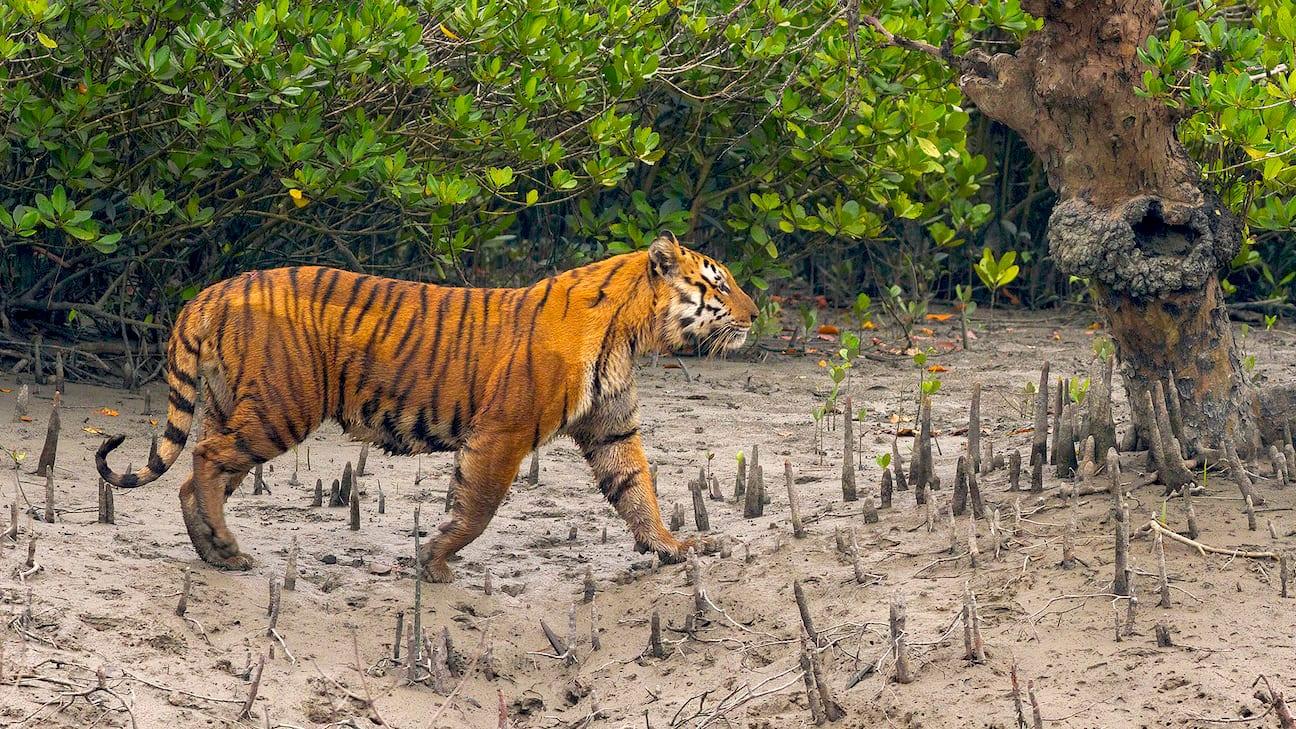
The Sundarbans is home to the Royal Bengal tiger, spotted deer, rhesus macaques, saltwater crocodiles, Irrawaddy and Ganges river dolphins and between 260 and 290 bird species, depending on the survey.
Visitors usually see deer, monkeys, crocodiles and many birds. Tigers live across the forest but are very rarely seen; their pugmarks are far more common.
The Sundarbans is best known for the Royal Bengal tiger, but most of what you will see is smaller and far more common: spotted deer, monkeys, crocodiles, dolphins and a remarkable number of birds. This guide sets out what is likely, what is rare, and the figures behind each.
Wildlife at a Glance
- Spotted deer
- About 30,000
- Irrawaddy dolphins
- About 451
- Bird species
- 260 to 290
- Sundari trees
- About 70% of the forest
Figures are the estimates published in the sources below; surveys use different methods and years.
How Likely Are You to See Each Animal?
| Animal | How likely | Where and when |
|---|---|---|
| Spotted deer | Very likely | Kotka, Kochikhali, Karamjal |
| Rhesus macaque | Very likely | Creek banks and trails |
| Kingfishers and other birds | Very likely | Creeks at dawn |
| Saltwater crocodile | Likely | Mudbanks at low tide; Karamjal breeding centre |
| Dolphins | Sometimes | Wide rivers, especially in the dry season |
| Royal Bengal tiger | Very rare | Pugmarks on trails and beaches |
The Royal Bengal Tiger
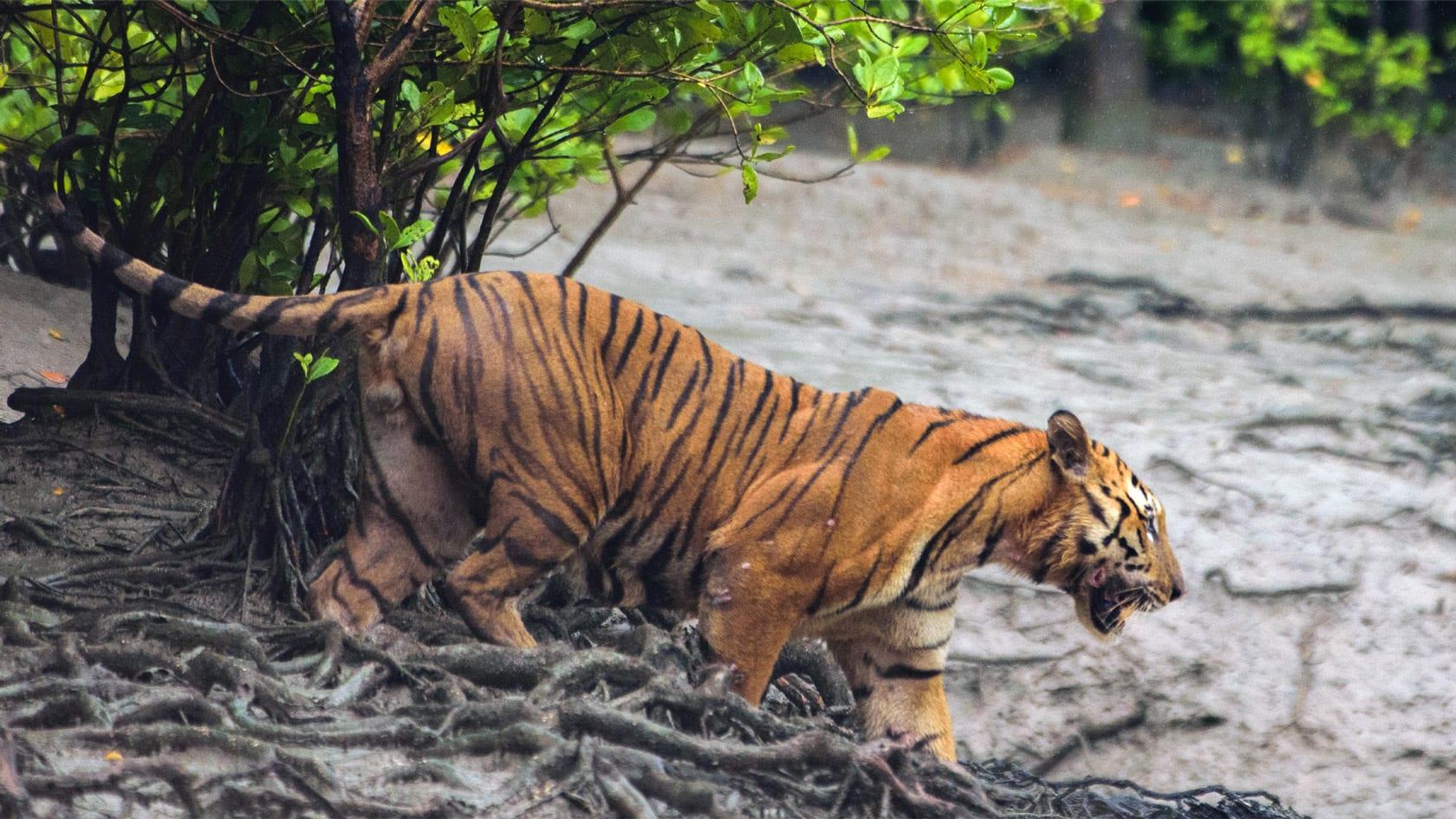
The Sundarbans is one of the few places on Earth where tigers live in a mangrove forest, swimming between islands and hunting deer and wild boar. They are shy, and most visitors never see one; finding fresh pugmarks with your guide is the usual tiger experience.
| Survey | Bangladesh Sundarbans tigers | Source |
|---|---|---|
| 2015 census | 106 | Sundarbans, Wikipedia |
| 2018 survey | 114 | Bengal tiger, Wikipedia |
| 2024 survey | 125 | Bangladesh Forest Department, via Mongabay |
Other Mammals and Reptiles
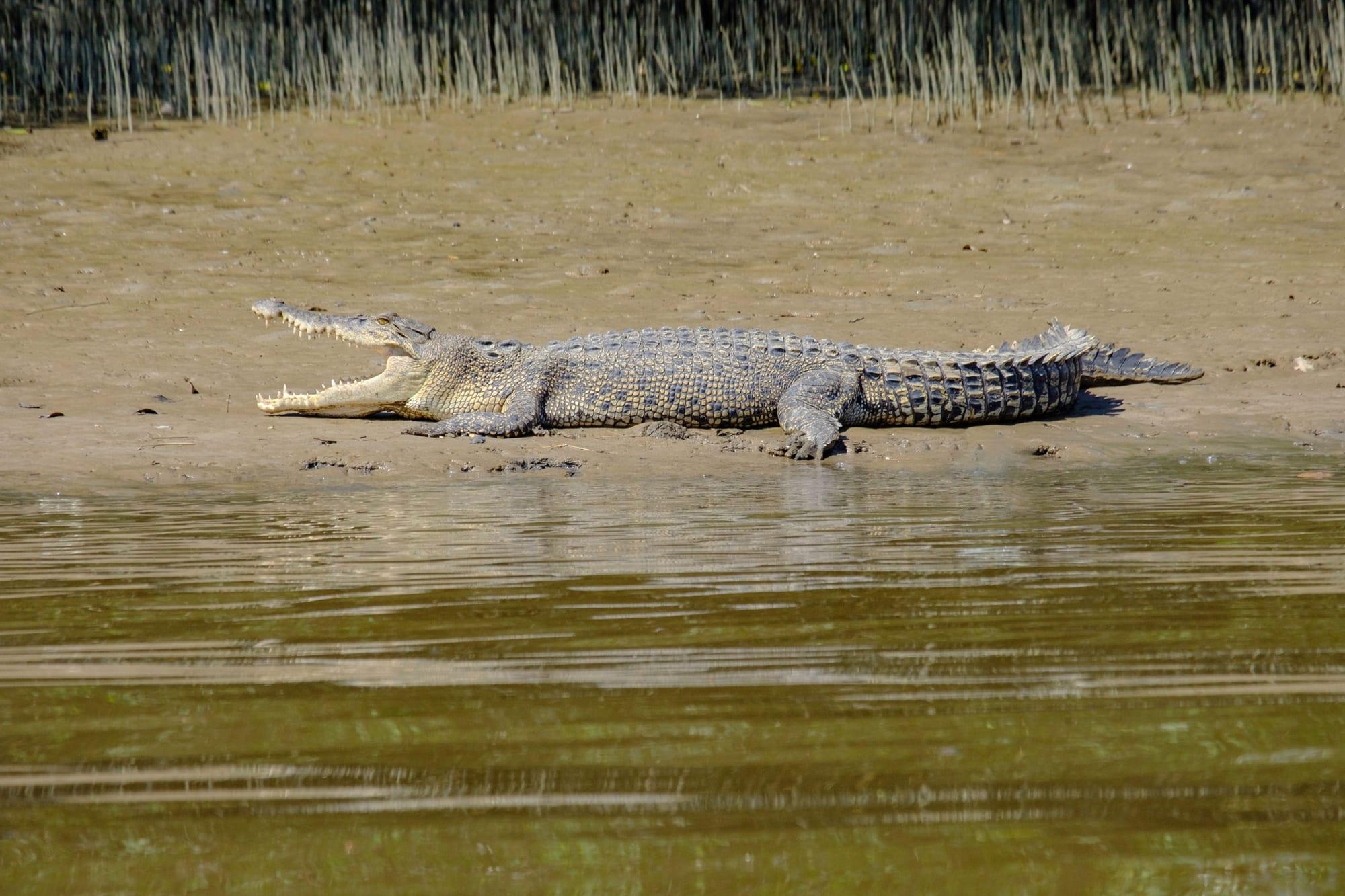
Saltwater crocodiles are the animal most visitors remember after the deer. They haul out on the mudbanks at low tide to warm up, often with their jaws open to cool down, and slide into the water as the boat comes close. Your guide watches the tide tables to time creek trips for low water.
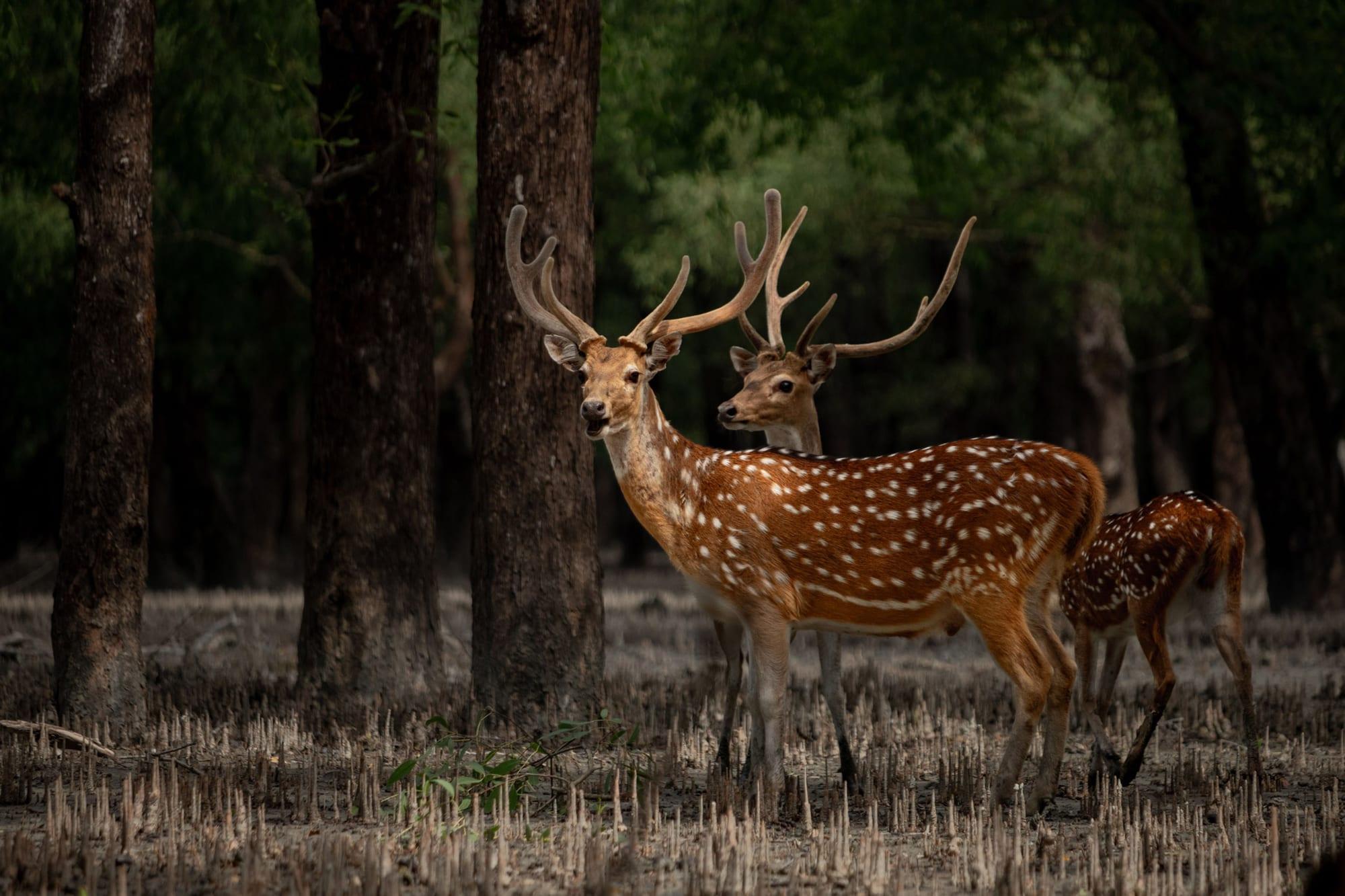
Spotted deer are the most common large animal in the forest, and the tiger's main prey. Herds graze the open meadows at Kotka and Kochikhali, often with rhesus macaques in the trees above, which drop leaves the deer feed on.
- Spotted deerThe most common large animal, seen in herds on open grassland.
- Rhesus macaqueTroops along the creek banks, often near deer.
- Saltwater crocodileBasks on mudbanks at low tide.
- DolphinsIrrawaddy and Ganges river dolphins in the wider rivers.
Birds
- KingfishersSeveral species along the creeks, often seen from the boat.
- Masked finfootA rare, threatened bird the Sundarbans is known for.
- Waders and heronsOn the mudflats and beaches near the sea.
- Best timeDawn canal trips in small country boats.
The Mangrove Forest
The forest is named after the sundari tree, Heritiera fomes, which makes up about 70% of its trees. Mangrove roots stick up out of the mud to breathe, and the whole forest floods and drains twice a day with the tides.
Frequently asked questions
How many tigers are in the Sundarbans?
The latest survey, published in October 2024, estimated 125 adult tigers in the Bangladesh Sundarbans, up from 114 in 2018 and 106 in 2015. Figures vary with method and year, so quote them with their source.
Will I see a tiger in the Sundarbans?
Probably not. Tigers are very shy, and sightings are rare even for guides who visit every week. Pugmarks are common.
What animals can you see in the Sundarbans?
Spotted deer, rhesus macaques, saltwater crocodiles, monitor lizards, dolphins and many birds, including several kingfisher species.
Why is it called the Sundarbans?
The name is usually traced to the sundari tree, which makes up most of the forest.
Sources and further reading