
The short answer
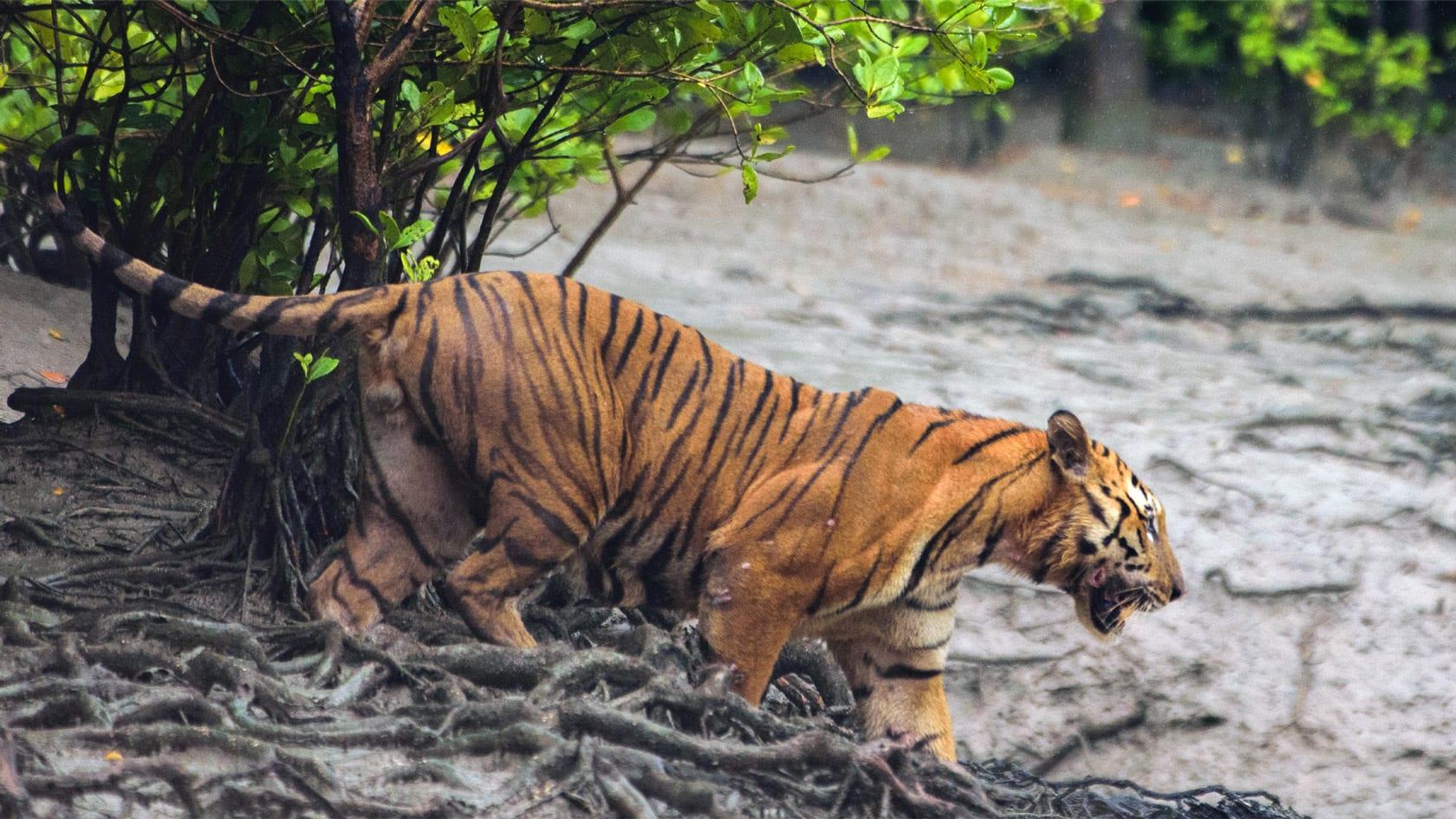
The latest official survey counted at least 125 adult Royal Bengal tigers in the Bangladesh Sundarbans, published in October 2024.
That is up from 114 in 2018 and 106 in 2015, an increase of about 18% since 2015. Tiger density rose from 2.17 to 2.64 tigers per 100 km². In July 2026, a state minister put Bangladesh's total at 189 tigers, including about 65 in zoos.
The Sundarbans is the only place in Bangladesh with a stable wild tiger population, and one of the few mangrove forests on Earth where tigers live. This page brings together every official count, how each was made, what the numbers show, and what threatens the tigers, with the source for every figure.
Tiger Numbers in Brief
- Latest survey (2024)
- 125 adult tigers
- Since 2015
- Up about 18%
- Density (2024)
- 2.64 per 100 km²
- Bangladesh Sundarbans
- 6,017 km²
How Many Tigers Are in the Sundarbans?
The Bangladesh Forest Department has counted tigers with camera traps three times. Each count has been higher than the last: 106 in 2015, 114 in 2018 and 125 in the survey published in October 2024. The 2024 figure counts adult tigers only.
- 2015106Camera traps; range 83 to 130
- 2018114Camera traps
- 2024125Camera traps, survey 2023–24
Sources: Bangladesh Forest Department, via Mongabay (2024) and the National Tiger Recovery Program (2016).
Show the data as a table
| Tigers in the Bangladesh Sundarbans | Adult tigers, camera-trap surveys | Note |
|---|---|---|
| 2015 | 106 | Camera traps; range 83 to 130 |
| 2018 | 114 | Camera traps |
| 2024 | 125 | Camera traps, survey 2023–24 |
These figures are for the Bangladesh side only. The Indian Sundarbans, in West Bengal, is counted separately by India.
Every Tiger Count Since 2004
| Year | Tigers | Method | Source |
|---|---|---|---|
| 2004 | 440 | Pugmark (footprint) count | Reported by SCMP, 2015 |
| 2015 | 106 | Camera traps | Dey et al. 2015, cited in the National Tiger Recovery Program |
| 2018 | 114 | Camera traps | Bangladesh Forest Department, reported 2019 |
| 2024 | 125 | Camera traps and pugmarks | Bangladesh Forest Department, via Mongabay |
Why Did the Count Drop From 440 to 106?
Mostly because the method changed, not because three-quarters of the tigers disappeared. The 2004 figure came from counting pugmarks, the tigers' footprints, which can't reliably tell one tiger from another. Officials later accepted that the method was unreliable.
From 2015, the Forest Department switched to camera traps, which photograph each tiger's unique stripe pattern, so the same animal isn't counted twice. The Forest Department's own recovery plan notes that the latest estimate is "much less" than earlier estimates, which is why the camera-trap figures are the baseline for every comparison since.
How Was the 2024 Tiger Survey Done?
- 1,210 camerasSet in pairs at 605 locations in the forest.
- 2,240 km² surveyedAbout half of the Bangladesh Sundarbans.
- 1,306 km of waterwaysSearched for pugmarks along rivers and canals.
- Two seasons2 Jan to 25 Apr 2023, and 1 Nov 2023 to 28 Mar 2024.
The survey covered three forest ranges: Khulna, Satkhira and Chandpai-Sarankhola. From the photographs and pugmarks, researchers identified 84 individual adult tigers and estimated the total at 125.
Is Tiger Density Rising?
Density is the number of tigers in each 100 km² of forest, and it shows how well the habitat supports them.
- 20152.17Camera-trap survey
- 20242.64Camera-trap survey
Sources: National Tiger Recovery Program (2016) for 2015; Mongabay (2024) for 2024.
Show the data as a table
| Tiger density in the Bangladesh Sundarbans | Tigers per 100 km² | Note |
|---|---|---|
| 2015 | 2.17 | Camera-trap survey |
| 2024 | 2.64 | Camera-trap survey |
Where Are Tigers Doing Better?
| Forest range | Trend in the 2024 survey | Reported reason |
|---|---|---|
| Khulna | Increased | Not specified |
| Chandpai-Sarankhola | Declined | Not specified |
| Satkhira | Largest decrease | Poaching of tigers and deer, and illegal resource harvesting |
Conservationists credit the overall rise to more patrolling against poachers and net fences that keep tigers from straying into villages.
How Many Tigers Live in Bangladesh in Total?
On Global Tiger Day, 29 July 2026, the State Minister for Fisheries and Livestock said Bangladesh has 189 tigers: 124 in the Sundarbans and about 65 in zoos.
- The Sundarbans124Wild
- Other zoos50About 50, in captivity
- National Zoo, Dhaka15About 15, in captivity
Source: State Minister for Fisheries and Livestock, reported by The Daily Star (29 July 2026).
Show the data as a table
| Where Bangladesh's 189 tigers live | Number of tigers, July 2026 | Note |
|---|---|---|
| The Sundarbans | 124 | Wild |
| Other zoos | 50 | About 50, in captivity |
| National Zoo, Dhaka | 15 | About 15, in captivity |
The minister's Sundarbans figure (124) is one lower than the 2024 survey estimate (125). The survey report is the official count; the minister also noted that tiger counting is the Forest Department's responsibility.
Why Are Sundarbans Tigers Special?
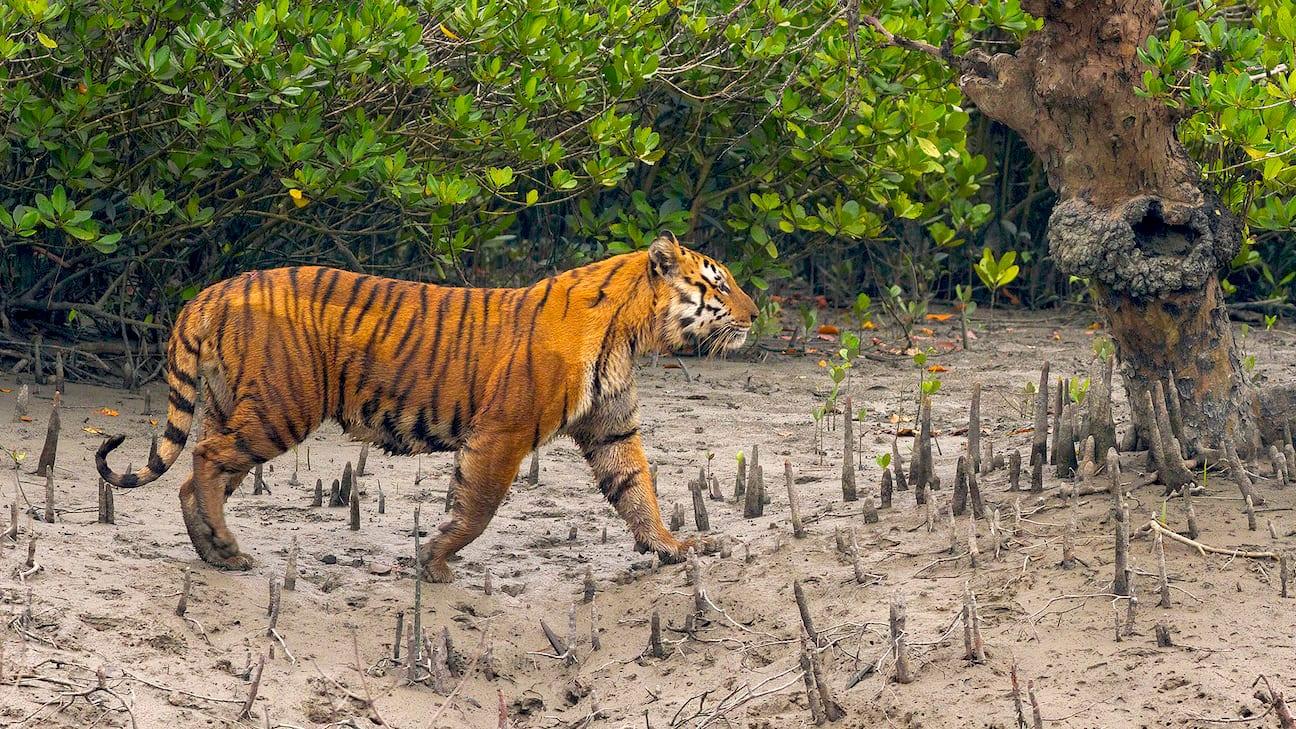
Sundarbans tigers live in a tidal mangrove forest that floods twice a day. They swim between islands, cross wide rivers and hunt spotted deer and wild boar on the mudflats.
The population is isolated: the Forest Department's recovery plan notes that it is separated from the nearest other tiger population by about 300 km of farmland and towns. That makes every tiger here important for the species. The tiger is listed as Endangered globally and Critically Endangered in Bangladesh.
What Threatens Sundarbans Tigers?
The Forest Department's National Tiger Recovery Program lists four main threats:
- PoachingTigers are killed for skins and body parts, traded illegally.
- Prey lossPoaching of spotted deer and wild boar leaves tigers less to eat.
- Conflict with peopleWhen tigers stray into villages, or people go into the forest for honey, fish and wood.
- Habitat pressureOver-harvesting, less fresh water from upstream, pollution and climate change.
The recovery plan also states that the Sundarbans "suffers the highest level of human killing by tigers in the world", which is why reducing conflict protects people and tigers alike.
How Is Bangladesh Protecting Its Tigers?
- 2010Tiger-range countries agree in St Petersburg to try to double wild tigers by 2022.
- 2017–2022The National Tiger Recovery Program sets a goal of a stable, growing population.
- Response teamsBy 2016, one Forest Tiger Response Team and 49 Village Tiger Response Teams handled straying tigers.
- 2026A 10-member commission on habitat protection and human-wildlife conflict is announced.
The Village Tiger Response Teams are volunteers from villages beside the forest, set up with the conservation group WildTeam, who step in when a tiger strays into a village, so that neither people nor the tiger are hurt. On Global Tiger Day 2026, IUCN Bangladesh and the Forest Department held events at four Forest Department range offices around the Sundarbans. The Minister of Environment, Forest and Climate Change restated a zero-tolerance policy on trafficking tigers and tiger parts.
What Does Tiger Recovery Cost?
The National Tiger Recovery Program estimated US$66 million for five years, July 2017 to June 2022: US$30 million expected from the government and US$36 million from donors.
- Anti-poaching patrols10Including SMART patrolling
- Monitoring and research8Including surveys
- Training and institutions8
- Livelihoods for forest users8
- Infrastructure5
- Wildlife crime unit and lab5
- Crime intelligence5
- Response team support5
- Staffing and insurance3
- Conflict mitigation3
- Habitat management3
- Cross-border crime control3
Source: Bangladesh Forest Department, National Tiger Recovery Program (2016), Table 1.
Show the data as a table
| Tiger recovery budget by activity | Million US dollars, July 2017 to June 2022 | Note |
|---|---|---|
| Anti-poaching patrols | 10 | Including SMART patrolling |
| Monitoring and research | 8 | Including surveys |
| Training and institutions | 8 | |
| Livelihoods for forest users | 8 | |
| Infrastructure | 5 | |
| Wildlife crime unit and lab | 5 | |
| Crime intelligence | 5 | |
| Response team support | 5 | |
| Staffing and insurance | 3 | |
| Conflict mitigation | 3 | |
| Habitat management | 3 | |
| Cross-border crime control | 3 |
Can You See a Tiger on a Sundarbans Tour?
Rarely. With about 2.6 tigers in every 100 km² of dense mangrove, most visitors never see one, and guides who visit every week see them only occasionally. What you will very likely find are fresh pugmarks on the mudbanks and trails, with your guide explaining how old they are and where the tiger was heading.
Frequently asked questions
How many tigers are in the Sundarbans in 2026?
The latest official survey, published in October 2024, estimated 125 adult tigers in the Bangladesh Sundarbans. In July 2026, a state minister put the number at 124.
Is the Sundarbans tiger population increasing?
Yes. Camera-trap surveys counted 106 tigers in 2015, 114 in 2018 and 125 in 2024, an increase of about 18% since 2015.
How many tigers are in Bangladesh?
189 in total, according to a state minister on Global Tiger Day 2026: 124 in the Sundarbans and about 65 in zoos.
Why did the Sundarbans tiger count drop from 440 to 106?
Because the method changed. The 2004 figure of 440 came from counting footprints, which officials later accepted was unreliable. Camera traps, used since 2015, identify each tiger by its stripes.
How are tigers counted in the Sundarbans?
With camera traps. In the 2024 survey, 1,210 cameras at 605 locations photographed tigers across 2,240 km², and each tiger was identified by its unique stripe pattern.
Will I see a Royal Bengal tiger in the Sundarbans?
Probably not. Sightings are rare, but pugmarks are common, and dawn trips on small boats in the south of the forest give the best chance.
Sources and further reading
- National Tiger Recovery Program 2017–2022, Bangladesh Forest Department (2016) (opens in a new tab)
- Tiger population census in Bangladesh shows a hopeful upward trend, Mongabay (17 October 2024) (opens in a new tab)
- Bangladesh has only 189 tigers left, The Daily Star (29 July 2026) (opens in a new tab)
- Together for Tigers: Global Tiger Day 2026, IUCN (7 August 2026) (opens in a new tab)
- Bangladesh discovers only 100 tigers remain in Sundarbans, South China Morning Post (2015) (opens in a new tab)
- Bangladesh tiger population rises after poaching crackdown, Phys.org (2019) (opens in a new tab)
- Village Tiger Response Teams in the Bangladesh Sundarbans, The Rufford Foundation (opens in a new tab)